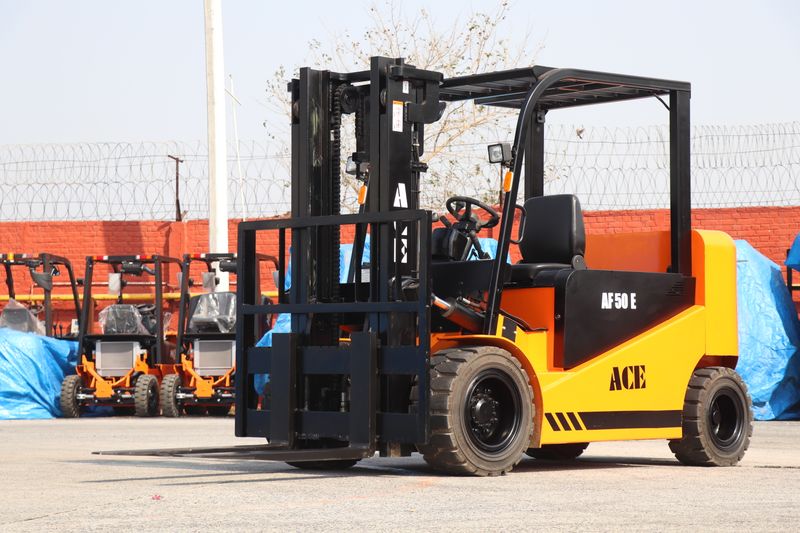
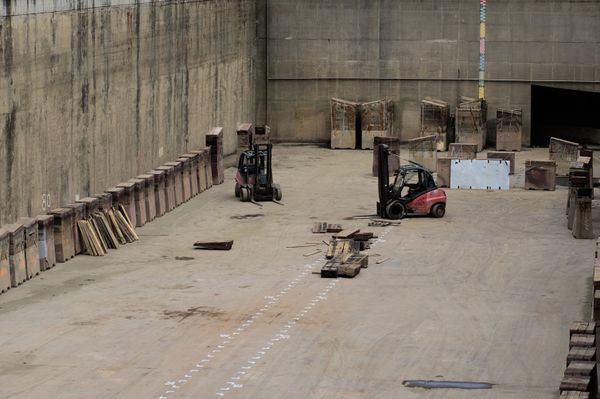
Client wrongly declared lead-acid forklifts as UN3556 following the new lithium rules, and wrongly assumed the vehicles needed a Class 9 label and placard
Solution
Corrected to UN3171 by cell chemistry, applied the SP962 marking exemption — no label or placard on identifiable vehicles — accepted first try
The Situation
A construction-machinery exporter received an order from a Bangladeshi buyer for 12 wet (lead-acid) battery powered forklifts, shipped from Shanghai to Chittagong. The client had recently heard about the new UN numbers for lithium vehicles after the 42-24 revision and assumed all electric vehicles had to be re-declared — so they declared the lead-acid forklifts as UN3556 (lithium-ion battery powered vehicle) and planned to label each vehicle with a Class 9 label and placard the container. The carrier's booking agent found the mismatch against the battery type and demanded a new set of documents.
The Problem
Bandwagon mis-declaration: the client over-generalized "lithium vehicles change to UN3556" to all electric vehicles, ignoring that wet (lead-acid) powered vehicles remain UN3171 — the error is the exact opposite of the lithium case
UN number reversed: after 42-24, UN3171 is narrowed to wet battery / sodium metal / sodium alloy powered vehicles, while lithium goes to UN3556 — the client had the two exactly swapped
Marking misjudged: the client assumed the vehicles needed a Class 9 label and placard, but under SP962 marking/labelling/placarding does not apply — labelling them could even lead to the destination port demanding removal
Unclear battery protection: the client also did not know the wet-battery terminal anti-short-circuit and anti-activation requirements
The Regulatory Basis
All regulatory facts below are verified against the IMDG Code 42-24 original text:
UN3171 entry: battery-powered vehicle / battery-powered equipment — Class 9, no subsidiary hazard, no packing group; special provisions SP388, SP961, SP962, SP971; not a marine pollutant.
The 42-24 narrowing: IMDG 42-24 (mandatory from 1 Jan 2026) significantly narrowed UN3171 to apply only to vehicles or equipment powered by wet batteries (lead-acid), sodium metal or sodium alloy batteries. GB 12268-2025 special provision 388 confirms the entry applies "only to vehicles or equipment fitted with batteries powered by wet batteries, sodium batteries or sodium alloy batteries"; lithium-ion, lithium metal and sodium-ion vehicles go under 3556/3557/3558.
SP962 exemption: special provision SP962 states that "the provisions of this Code relevant to marking, labelling, placarding and marine pollutants shall not apply" — when the vehicle is readily identifiable, no Class 9 label, no placard, and no UN number marking is required.
The only exception: when a vehicle is fully enclosed in crates, boxes or other means so it cannot be identified externally, the outer packaging must carry the appropriate label (Model 9 for UN3171; Model 9A for UN3556/3557/3558).
SP961 exception: vehicles stowed in vehicle spaces / special category spaces / ro-ro spaces / on the weather deck of a ro-ro ship (or cargo spaces specially approved by the flag state under SOLAS II-2/20) with no leakage are not subject to the IMDG Code; loading into a container first and then onto the ro-ro ship's container deck does not qualify.
Practical requirements: wet-battery vehicles should have the battery disconnected before transport to prevent accidental activation; battery terminals protected against short circuit (insulating caps, non-conductive filling); vehicles secured against movement; multi-vehicle boxes need non-conductive separation and per-unit lashing.
How We Solved It
Step 1 — Re-assess the chemistry and correct to UN3171
We checked the battery nameplate and confirmed the vehicles were wet (lead-acid) powered — not lithium-ion or sodium metal. The declaration basis was corrected from UN3556 to UN3171, with the proper shipping name "Battery-powered vehicle".
Step 2 — Rule the marking under SP962
The forklifts were unpacked and readily identifiable, so under SP962 no Class 9 label, no placard and no UN number marking was required. We also cancelled the client's labelling plan to avoid the destination port demanding removal (there is a precedent of Antwerp requiring removal of UN3171 labels).
Step 3 — Apply anti-short-circuit and securing
✅ Wet-battery terminals fitted with insulating caps and non-conductive filling
✅ Battery disconnected before transport to prevent accidental activation
✅ Vehicles secured in the container — parking brake engaged, wheel chocks, lashing against movement
✅ Certified inspector supervised stowage and issued the container packing certificate
Step 4 — Complete documents and use the DG channel
Re-issued the MSDS and transport condition appraisal (marked UN3171 / Class 9 / battery-powered vehicle), attached a technical note on terminal protection and securing, and completed maritime cargo and booking declaration under the DG process.
Key Takeaway
After the 42-24 revision, the two most common "reversed" declarations are lithium vehicles wrongly declared UN3171 (old rule) and lead-acid vehicles wrongly declared UN3556 (new rule) — exactly opposite directions. Remember one rule: battery chemistry decides the UN number — wet (lead-acid)/sodium metal/sodium alloy → UN3171; lithium-ion/lithium metal/sodium-ion → UN3556/3557/3558. Identifiable vehicles are exempt from marking under SP962 — no label, no placard; only fully enclosed vehicles need the appropriate label.
Result
✅ Declaration corrected from UN3556 to UN3171; documents matched the cargo and the carrier accepted the booking the same day
✅ SP962 exemption applied: no label, no placard on the vehicles — avoiding destination-port detention for a marking defect
✅ Wet-battery protection and securing passed inspection first try, no schedule slip
✅ Client now has a "route by chemistry" checklist — lead-acid / lithium / sodium-ion no longer confused
Similar Commodities (UN3171 — wet battery powered vehicles/equipment)
The following wet (lead-acid) or sodium metal/alloy battery powered vehicles and equipment are also declared under UN3171. Each image is matched one-to-one with its commodity name:
Commodity: Warehouse electric forklift (lead-acid battery)
Identifiable vehicles need no marking under SP962; protect terminals and prevent activation
Commodity: Electric forklift (wet battery powered)
Wet-battery terminals must be insulated; multi-vehicle boxes need non-conductive separation and per-unit lashing
Commodity: Outdoor forklift (lead-acid battery)
On a ro-ro ship's vehicle space, SP961 may exempt the shipment from the IMDG Code
Commodity: Warehouse electric handling equipment (lead-acid battery)
When fully enclosed in boxes/crates, the outer packaging must carry the Class 9 label